I came through the doors of Markham Convention Centre on Friday 18 April 2025 to photograph Adeeva's sweet sixteen. The gold staircase and floral arch gave the arrivals a setting of their own, before the evening moved to the stage. I began in the lobby with her mother. Looking back through the photographs, though, I keep stopping at a less composed frame: her younger brother playing the guitar, with two people helping him with a microphone. They could easily be treated as distractions. Leave them out, and the picture becomes simpler. I think it also loses something.
In the lobby
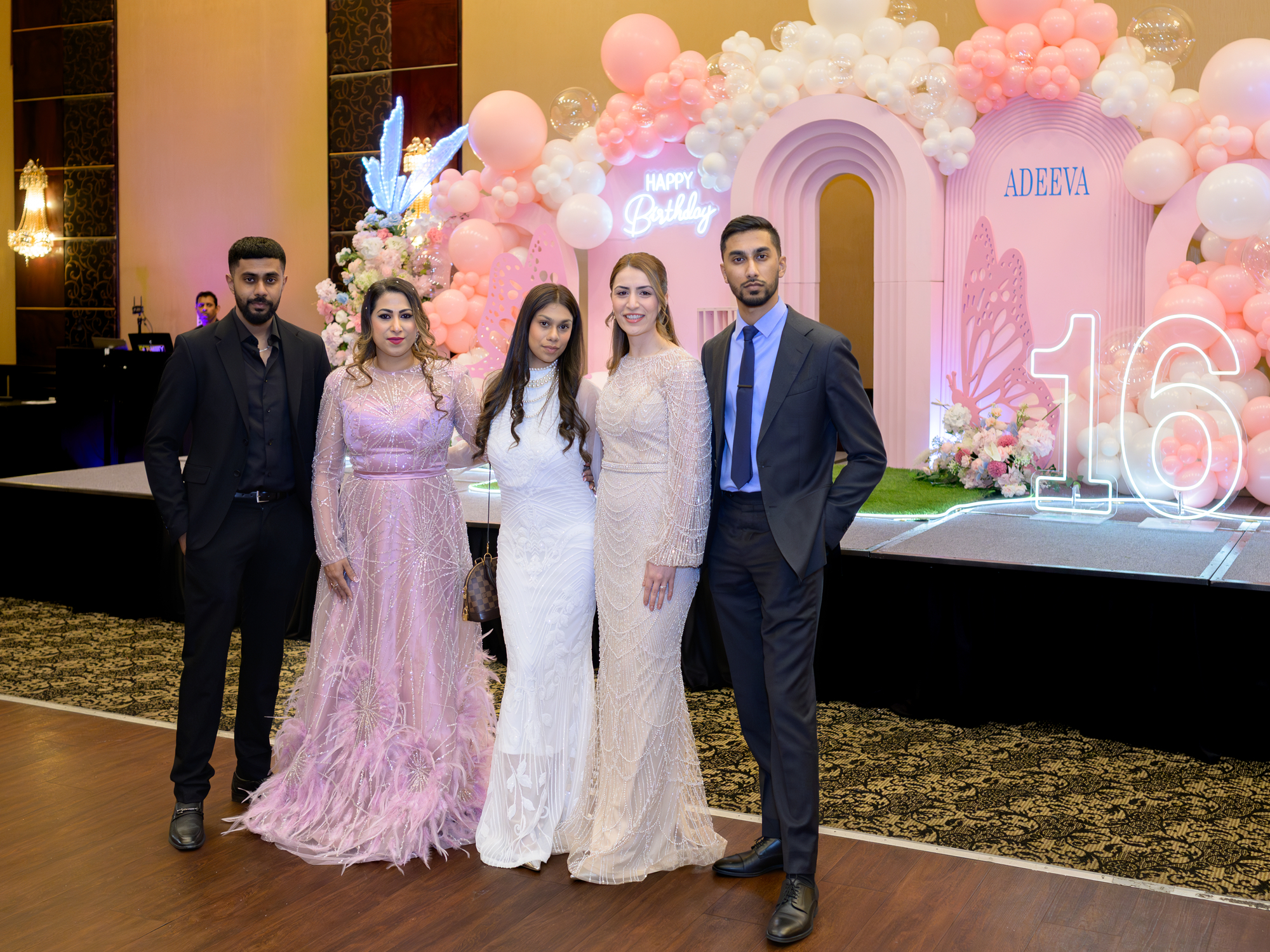
A portrait for her mother
Her mother has a photograph of her own before the stage takes over. I like having this early portrait to return to later, when she is lighting the candles. In one, she has space to be seen; in the other, her attention is on a task. It is easy, when photographing a daughter's birthday, to include a parent only beside the daughter or in the middle of doing something. This frame gives her a place without either condition. A parent can appear in plenty of birthday photographs without ever having a portrait to herself. A group photograph would not quite replace this one. I would make room for both, even in a small selection.
Her brother's turn
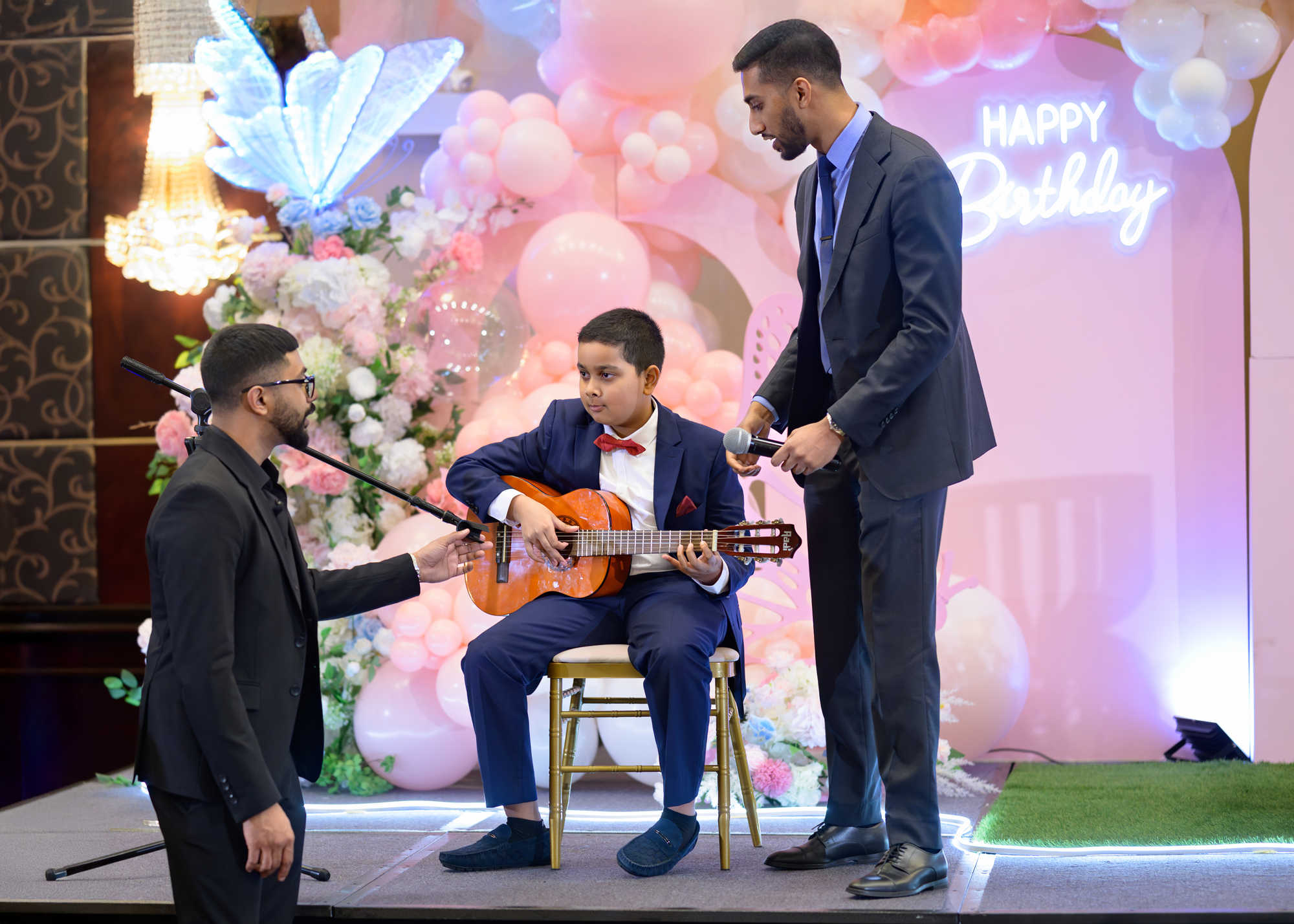
More than a solo
Her younger brother's photograph makes me pause for almost the opposite reason. It would be easy to give him the frame to himself. Instead, the help is visible. There are three people involved in getting this guitar heard, even though only one is playing it. A close-up could tell us that he performed. The wider photograph tells us something about how this part of the evening came together. I would not call the hands around the microphone clutter. They connect him to the people helping him. That is the distinction I look for at the edge of a documentary photograph: does the extra detail pull me away, or does it tell me something I would otherwise miss?
I do not think a family photograph has to look as though nobody needed a hand.

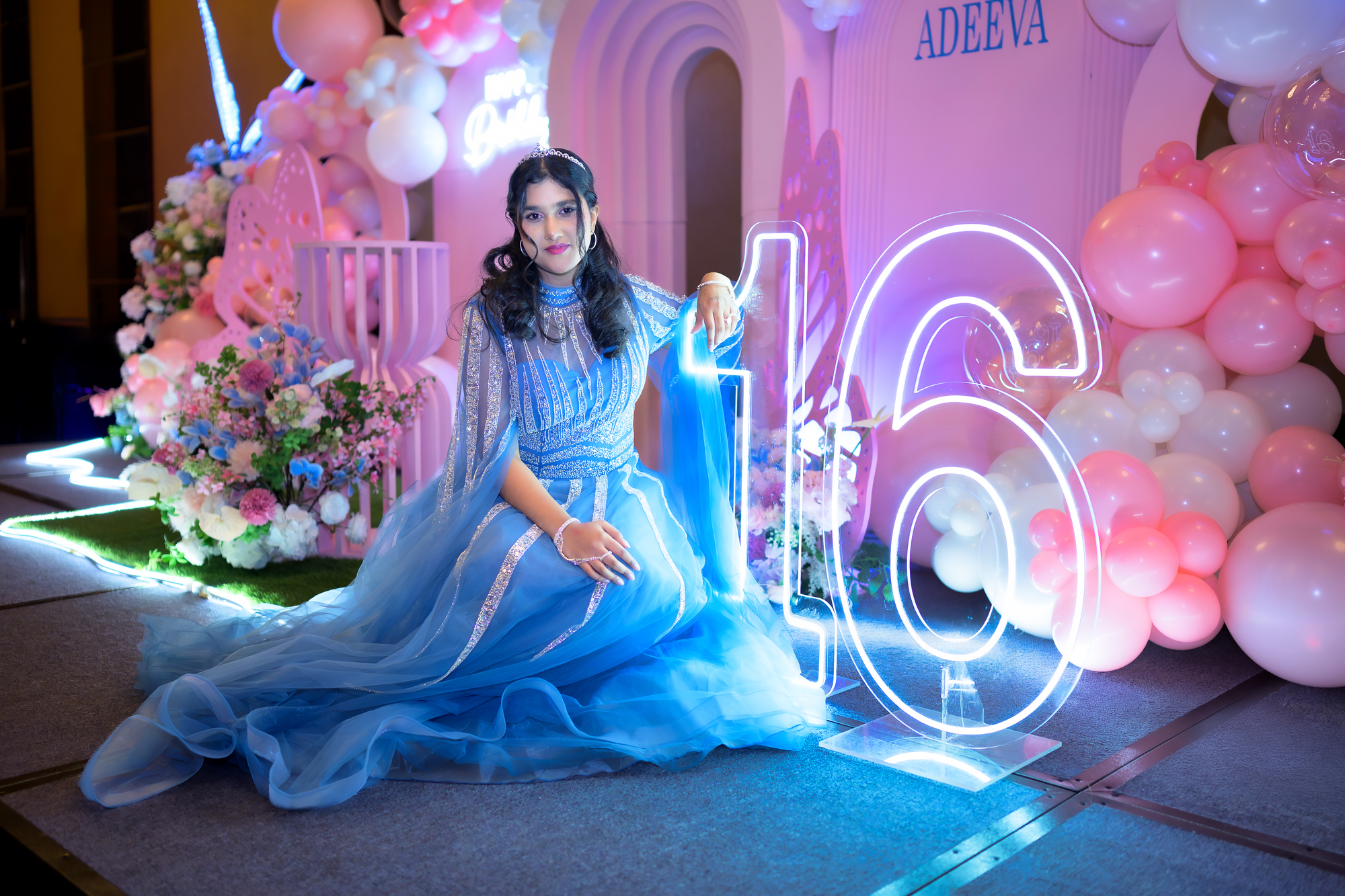
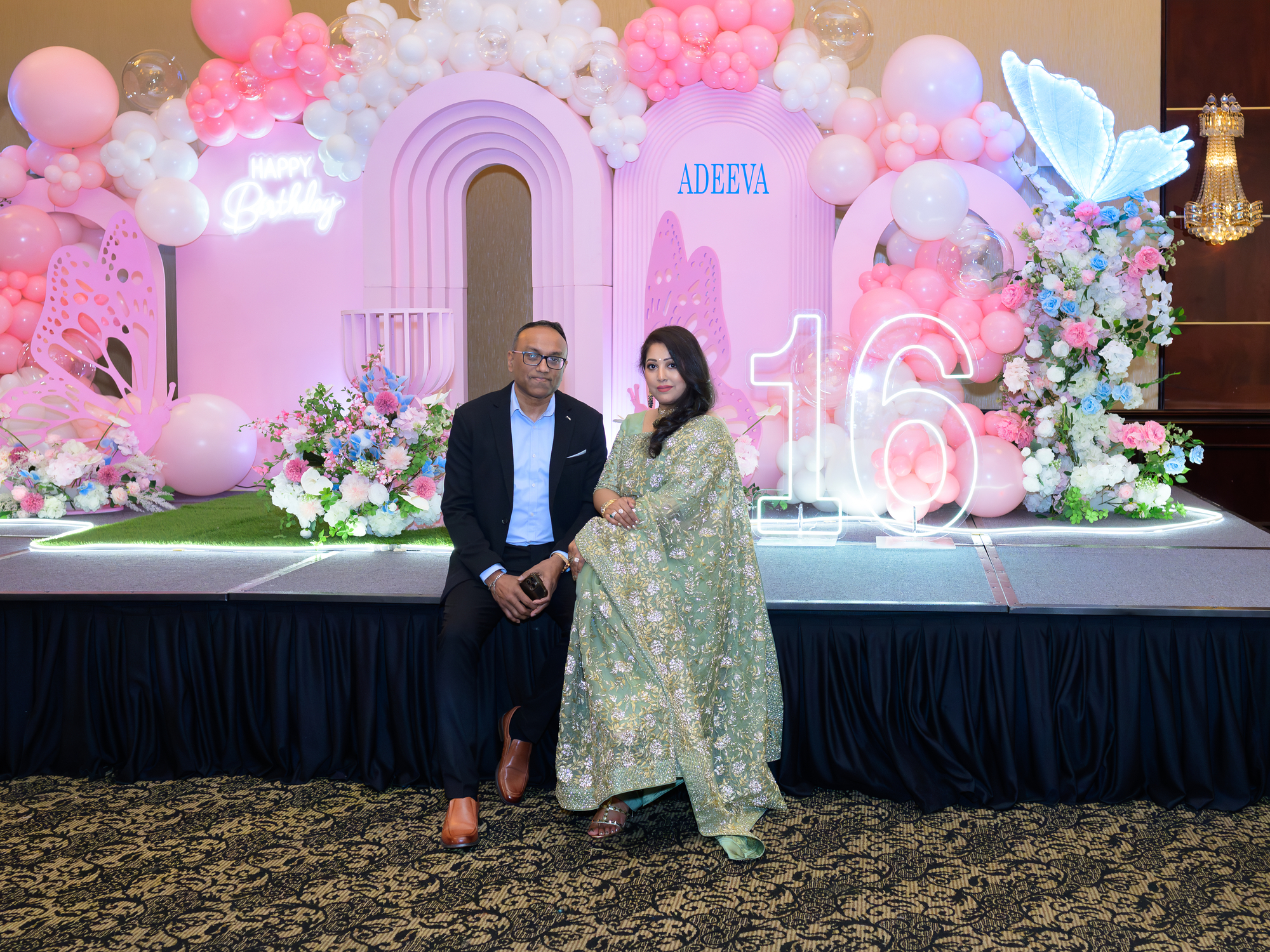
By half past seven, her mother has changed into a green saree and is seated beside Adeeva's father. The evening is moving along, and I like being able to follow it through people other than Adeeva. With her own portraits, there is a different change to notice. The seated photograph and the laughter with the dancers are sixteen minutes apart. I would keep them close together in the story. There is no need to label one the formal version and the other the real Adeeva. The pose is something she is doing, too. Looking at the pair, I can appreciate the care of a composed portrait without mistaking it for the mood of the whole evening. The photograph with the dancers gives that portrait some company, not a correction.
Before the sparklers
Her mother returns to the story
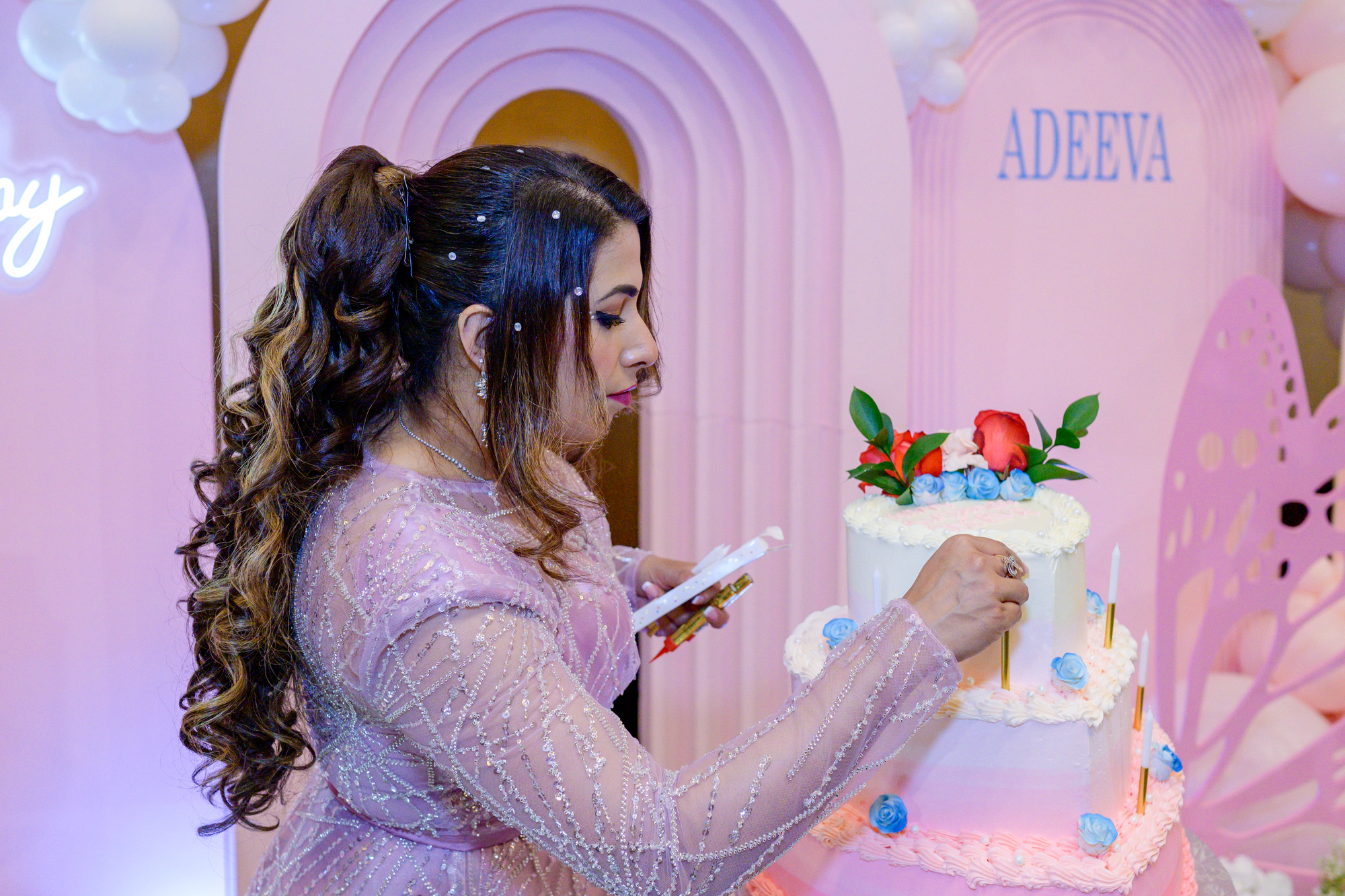
At 9:38 pm, her mother is lighting the candles. Four minutes later, the sparklers are burning and the family is gathered at the cake. Read together, the photographs have a beginning as well as a bright centre. The earlier frame lets the preparation remain visible instead of presenting the celebration as something that arrived ready-made. Here I come back to her mother's lobby portrait. The woman who had the frame to herself is now doing something for her daughter. I like the connection between those two appearances, separated by most of the evening. The family photograph with the sparklers is still the big moment. I find it warmer with the few minutes before it allowed to stay.
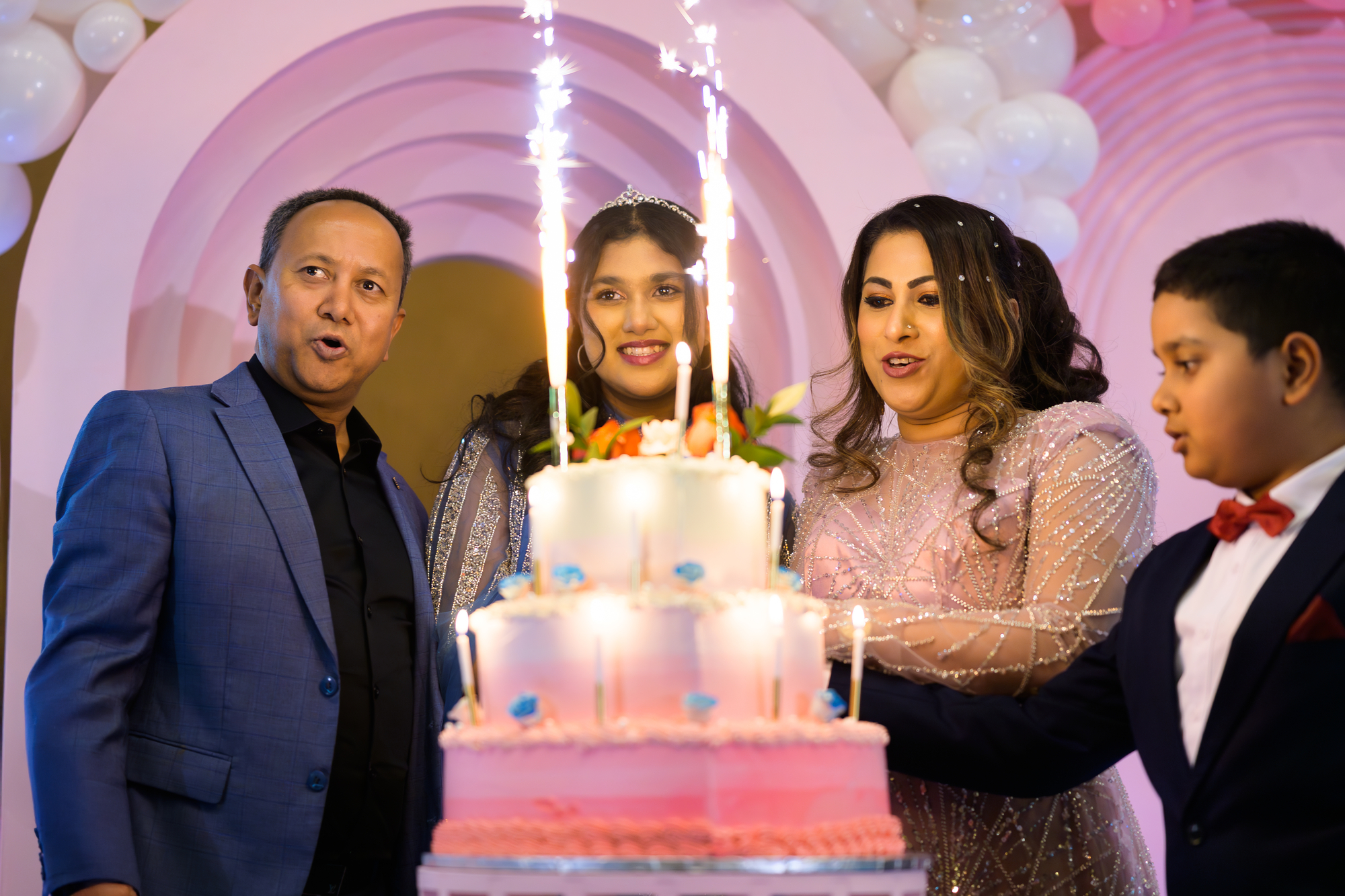
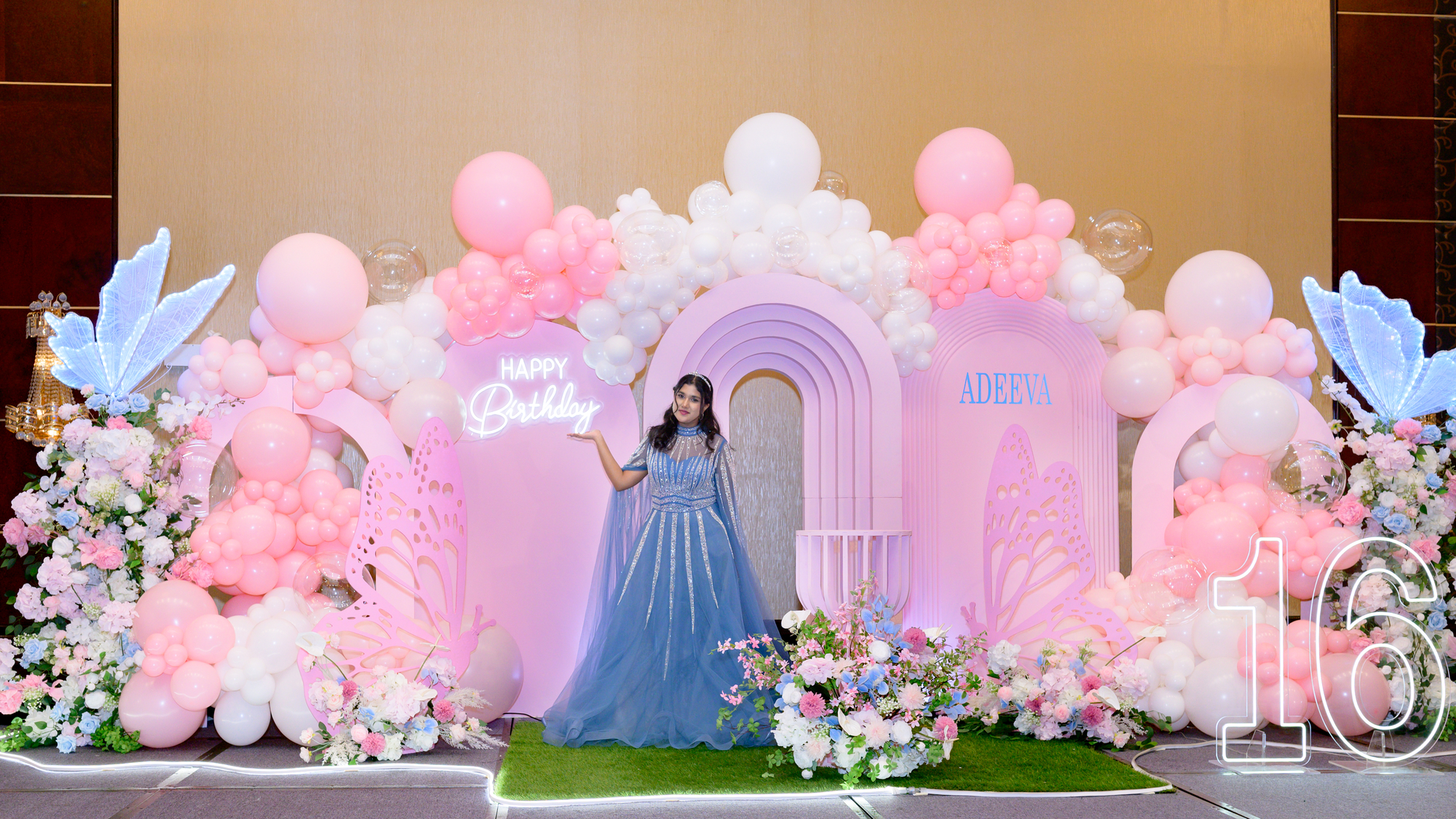
The cake was not where the photographs ended. My last frame here is from 10:44 pm, more than an hour after the sparklers. Stopping at the cake would have meant missing the photograph that closes this gallery. That is worth noticing when choosing a sweet 16 photographer in Toronto: check what is scheduled after the cake before deciding where coverage ends. It is a practical question for birthday photography and videography that this evening answers quite clearly. But when I look back, it is the guitar photograph I return to. Adeeva is not in it, yet it tells her something about her own birthday: her younger brother played, and people helped him be heard. I would not trade that for a neater photograph of the performance. I would leave the helping hands exactly where they are.